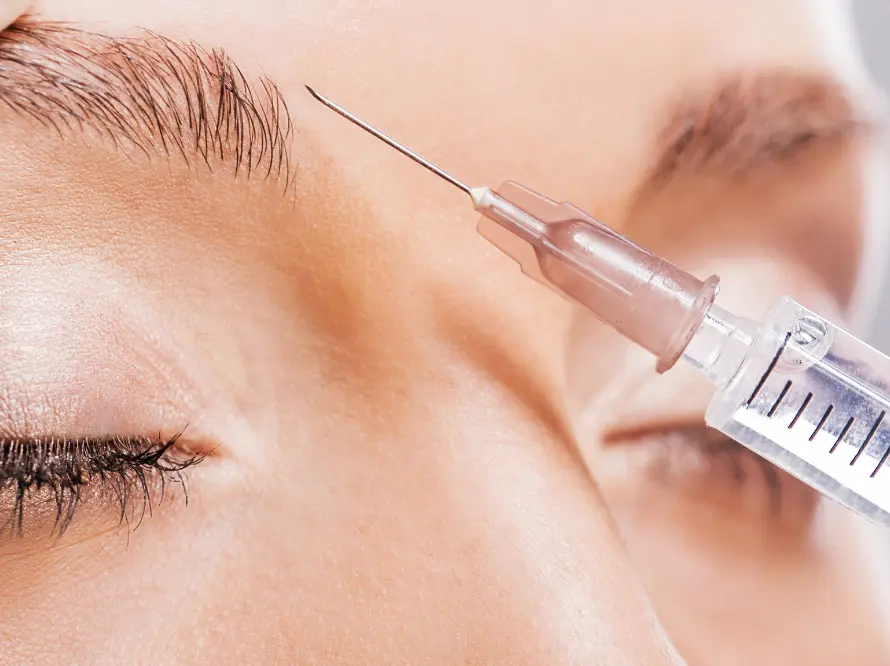


The world of injectable treatments is expanding fast, and with it comes new terminology that can be confusing — even for people who have been having treatments for years.
Two terms you’ll hear often are hyaluronic acid fillers and collagen-stimulating (biostimulatory) fillers, such as Sculptra™ and Radiesse™. They’re both used to address volume loss and signs of ageing, but they work in very different ways, carry different risk profiles and require different levels of expertise.
Understanding the difference is essential so you can make informed, safe choices.
What Are Hyaluronic Acid Fillers?
Hyaluronic acid (HA) is a substance naturally found in the skin and connective tissues. It attracts and holds water, helping to keep skin plump and hydrated.
HA fillers are gel-like products (examples include Juvederm™, Restylane™, Teosyal™ and others[ED1] ) that are injected to:
- Restore lost volume (cheeks, temples, lips)
- Soften lines and folds (nasolabial folds, marionette lines)
- Enhance features (lips, chin, jawline, nose)
- Improve skin hydration and quality (skin boosters, some “light” fillers)
How do HA fillers work?
- The gel is placed where volume is needed.
- It provides immediate lifting or filling.
- Over time, the body gradually breaks it down.
HA fillers vary in thickness, elasticity and how long they last, so your practitioner selects specific products for specific areas.
Key advantages of HA fillers
- Immediate results – you see a change during or shortly after treatment.
- Reversible – most HA fillers can be dissolved using an enzyme called hyaluronidase, this is an added safety net if you have any adverse result.
- Widely used and studied – there is a large body of clinical experience with hyaluronic acid dermal fillers, which have been around for over 25 years.
Limitations and risks
- Results are temporary (typically 6–12 months, depending on product, area and individual factors).
- There are risks associated with improper patient selection, improper product selection, unskilled injection or rarely, the product itself. Unattractive or unnatural results are dependent upon injector skills
- Serious complications, including vascular occlusion (blocked blood vessel) and, rarely, blindness, can occur if injected incorrectly — which is why proper medical training, product choice and injection technique are critical.
What Are Collagen-Stimulating Fillers?
Collagen-stimulating fillers (also called bio stimulatory fillers) work differently. Instead of simply filling space with gel, they trigger your skin to produce more of its own collagen over time.
Two well-known examples are:
- Sculptra™ (poly-L-lactic acid / PLLA)
- Radiesse™ (calcium hydroxylapatite / CaHA)
How do they work?
- Sculptra™ (PLLA)
- Contains microparticles of poly-L-lactic acid suspended in sterile water.
- Initially, you see some volume from the water, which is reabsorbed over a few days.
- Over weeks to months, PLLA stimulates your skin to produce new collagen in the treated areas.
- Results build gradually and can last 2+ years when used appropriately.
- Radiesse™ (CaHA)
- Contains tiny calcium-based microspheres in a gel carrier.
- Provides immediate lifting from the gel plus longer-term collagen stimulation from the microspheres.
- Often used for deeper structural support (e.g. lower face, jawline, chin, hands).
- Results can last 12–18+ months, sometimes longer.
What do collagen-stimulators treat?
They are typically used to:
- Restore structural support in the mid and lower face
- Improve skin laxity and contour
- Treat deeper folds and volume loss
- Rejuvenate areas like the hands
They are not suitable for all areas (for example, they are not used in lips or around the eyes.).
Key Differences: HA vs Collagen-Stimulating Fillers
1. Mechanism of action
- HA fillers
- Add instant volume
- Collagen-stimulating fillers
- Aim to stimulate your own collagen for a gradual, more structural improvement.
- Some brands give immediate volume correction, followed by collagen stimulation over time, others give gradual volume and collagen changes..
2. Onset of results
- HA – immediate
- Sculptra™ – subtle early changes; full results may take 8–12+ weeks and multiple sessions.
- Radiesse™ – some immediate lift plus progressive improvement as collagen develops.
3. Longevity
- HA fillers – usually 6–18 months, depending on product, placement and individual.
- Sculptra™ – around 2+ years in many cases.
- Radiesse™ – typically 12–18+ months, sometimes longer.
Response and longevity is highly individual and depends on metabolism, lifestyle and treatment plans.
4. Reversibility
This is a crucial safety point.
- HA fillers
- Can generally be dissolved with hyaluronidase if needed.
- Sculptra™ and Radiesse™
- Cannot be dissolved in the same way.
- Once injected, they need time to break down naturally.
- If there is a complication (e.g. nodules, misplacement, vascular issues), management is more complex and may require specialist intervention.
Because of this irreversible nature, biostimulatory fillers demand high levels of skill, anatomical knowledge and patient selection.
Are Collagen-Stimulating Fillers “Better”?
“Better” depends on:
- Your age and skin quality
- Your goals (subtle structural change vs specific contouring)
- Your tolerance for risk and irreversibility
- The experience and training of your practitioner
HA fillers may be more appropriate if:
- You are new to injectable treatments.
- You want the safety nert of being able to reverse.
- You are targeting lips, tear troughs, or fine line areas where precise, delicate work is needed.
- You’re not yet sure what level of change you want, or you prefer the option to reverse.
Collagen-stimulating fillers may be considered if:
- You have more established volume loss or laxity, particularly in the mid and lower face or hands.
- You’re seeking longer-term, structural improvement rather than quick but temporary corrections.
- You’re comfortable with gradual results and cannot (or do not want to) keep returning frequently for HA top-ups.
- Your practitioner, after a full assessment and medical history, feels you are a suitable candidate and has advanced training and experience with these products.
Neither option is “one size fits all” — and neither is without risk.
Safety Considerations: Why the Practitioner Matters
All injectable treatments carry risk, including:
- Bruising, swelling, asymmetry
- Infection
- Nodules or lumps
- Vascular occlusion (blocked blood vessel)
- Very rarely, blindness or skin damage
These risks are significantly reduced when you see a medically qualified, properly trained, insured and independently accredited practitioner who:
- Uses licensed, genuine products from reputable pharmacies
- Has advanced anatomical knowledge
- Can recognise and manage complications appropriately
- Practices in a clinical environment that meets infection control and safety standards
For collagen-stimulating fillers in particular, the bar must be even higher because:
- They cannot simply be dissolved if something goes wrong.
- Poor technique can cause lumps, nodules or unnatural results that may persist for a long time and need medical management.
- They require careful patient selection, dosing and placement.
Questions to Ask Before Any Filler Treatment
Whether you’re considering HA or collagen-stimulating products, it’s reasonable — and sensible — to ask:
- What product are you using and why?
- Is this hyaluronic acid or a collagen stimulator (like Sculptra™ or Radiesse™)?
- Is the product licensed for this area and indication in the UK?
- What training and experience do you have with this specific product?
- What are the risks, and how would you manage a complication?
- If I’m unhappy with the results, what are my options?
- (Remember: HA can usually be dissolved; Sculptra™/Radiesse™ cannot.)
A reputable, accredited practitioner will welcome these questions and will be able to answer them clearly.
The Save Face Perspective
At Save Face, our priority is simple: your safety comes first.
- We do not promote one product over another.
- We emphasise that even the “best” product in the wrong hands can be unsafe.
- We encourage patients to understand what is being injected, where, and by whom.
Whether you choose hyaluronic acid fillers or collagen-stimulating fillers, the most important decision you make is who treats you.
Using the Save Face Government-approved register, you can find:
- Medically qualified practitioners
- Who are trained, insured and regularly inspected
- Working in clinics that meet robust standards for safety, hygiene and record-keeping
- With transparent information about their qualifications and treatments offered
In Summary
- Hyaluronic acid fillers:
- Add immediate volume
- Usually reversible with hyaluronidase
- Typically last 6–18 months
- Collagen-stimulating fillers (Sculptra™, Radiesse™):
- Stimulate your own collagen for gradual, longer-term changes
- Are not easily reversible
- Require advanced training and careful patient selection
There is no universally “better” option — only what is safest and most appropriate for you, guided by a skilled, accredited medical practitioner.
Before you book, take a moment to check the Save Face register and ensure your health and your appearance are in safe hands.
Categories
Related news articles