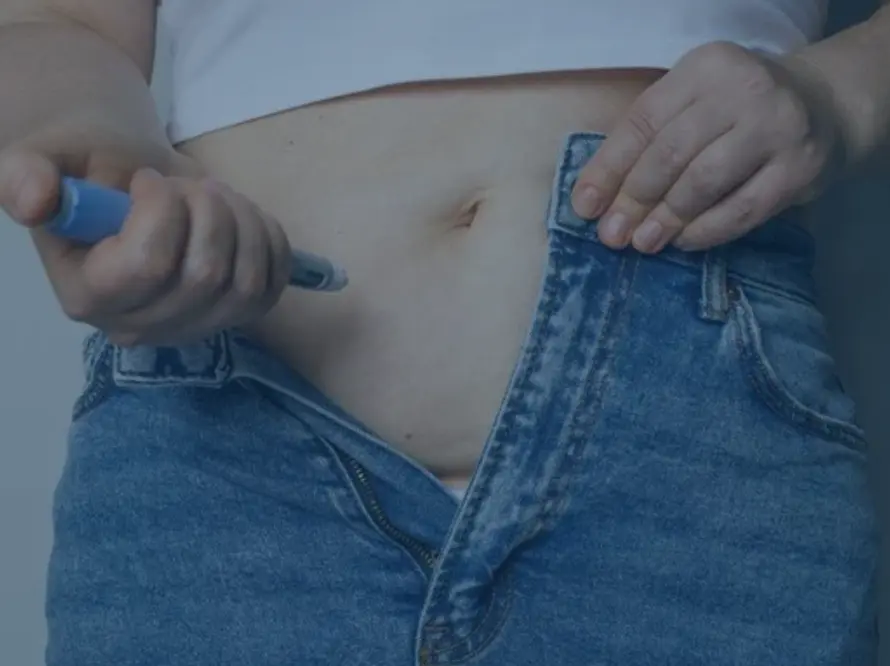


GLP‑1 medications such as Wegovy® and Ozempic® have helped many people lose significant weight and improve their health. As Ozempic weight loss has become more widely discussed, social media has created a new scare term: Ozempic Face.
The phrase suggests the drug is “ruining” people’s faces. In reality, it describes the normal facial changes that can happen after substantial weight loss, however that weight is lost. Understanding what’s really going on, and how to manage it safely, is far more useful than the label itself.
What Is Ozempic Face?
Your face is supported by deep and superficial fat pads, ligament structures, muscle and bone. These fat pads help to support the mid‑face and cheeks, maintain smooth transitions between eyelids, cheeks and jawline, and generally keep the skin looking full and youthful
When you lose a lot of weight, your body can’t choose where fat is reduced. Alongside fat from the abdomen, hips and thighs, some facial fat will also be lost. This means that people often notice:
- Flatter or hollow cheeks
- Deeper nasolabial folds and marionette lines
- More obvious under‑eye hollows or “tear troughs”
- Looser skin under the chin and along the jawline
These changes can occur after any significant weight loss, from dieting, bariatric surgery or illness, not just GLP‑1 medication. So, what is Ozempic Face? It is best understood as facial volume loss and skin laxity after weight loss, rather than a specific side effect of semaglutide in GLP-1.
Who Is More Likely to Notice Facial Changes?
Not everyone who loses weight will develop obvious facial hollowing. You are more likely to notice it if:
- You lose a large amount of weight or lose it very quickly
- You are over 40, when collagen and elastin are already in natural decline
- You have additional skin damage from sun exposure or smoking
Nutrition matters too. Very low-calorie intake and poor food quality while appetite is suppressed can contribute to:
- Dull, less elastic skin – on the face and body
- More pronounced skin laxity
- Hair thinning or shedding, which is commonly discussed in weight‑loss support groups
Can You Prevent Ozempic Face?
You cannot fully prevent facial change if you lose a lot of weight, but you can make transitions gentler by:
- Working with your prescribing practitioner to lose weight at an appropriate, steady pace
- Eating a nutrient‑dense diet with sufficient protein, healthy fats, vitamins and minerals
- Staying well hydrated
- Using daily broad‑spectrum SPF and a simple, gentle skincare routine
- Including resistance training to support muscle tone and skin to address concerns around Ozempic muscle loss
These steps will not stop normal ageing or weight‑related change, but they can reduce the severity of Ozempic face and help your skin and hair cope better.
Safe Aesthetic Treatment Options After Weight Loss
If you are wondering how to fix Ozempic face and are unhappy with hollowness or sagging once your weight has stabilised, several medical aesthetic treatments can help. Results are usually best when treatments are combined and tailored to you.
The following treatments are aimed at restoring facial volume, contours and support.
Hyaluronic acid dermal fillers
Dermal fillers are used strategically in the cheeks, temples, chin, jawline or pre‑jowl areas to:
-
- Restore mid‑face support
- Improve jawline definition
- Soften deep folds and shadows
Collagen‑stimulating injectables
Examples include Sculptra® (poly‑L‑lactic acid), PCL‑based products and calcium hydroxyapatite fillers such as Radiesse®. These do more than simply “fill”; they stimulate your own collagen to firm and thicken the skin, and improve structure and resilience over several months.
Thread lifts (PDO, PLLA, PCL)
Thread lifts can provide a subtle lift for mild laxity and encourage collagen in the treated areas. They are not a replacement for a surgical facelift and should only be used in carefully selected patients.
Surgery
For more advanced skin laxity, especially after very large weight loss, surgery (for example, facelift, neck lift or body contouring procedures) may be the only realistic option. This should always be discussed with a GMC‑registered plastic surgeon in a regulated hospital setting.
A responsible practitioner will assess your face as a whole when treating Ozempic face, and may recommend a phased combination of treatments, rather than simply “filling lines”.
Skin And Body Changes with Weight Loss
While many people expect to see so-called Ozempic face, rapid or significant weight loss can also lead to:
- Loose skin on the abdomen, arms and inner thighs
- Crepey skin on the chest and décolletage
- Hair shedding due to nutritional stress
Non‑surgical skin tightening devices (radiofrequency, HIFU, etc.) may offer modest improvement in mild laxity, but rarely match the expectations set on social media. It is important to have a realistic discussion with a medical professional about what these treatments can and cannot achieve, and when surgery might be more appropriate.
Weight‑Loss Injections: Real vs Fake Wegovy® and Ozempic®
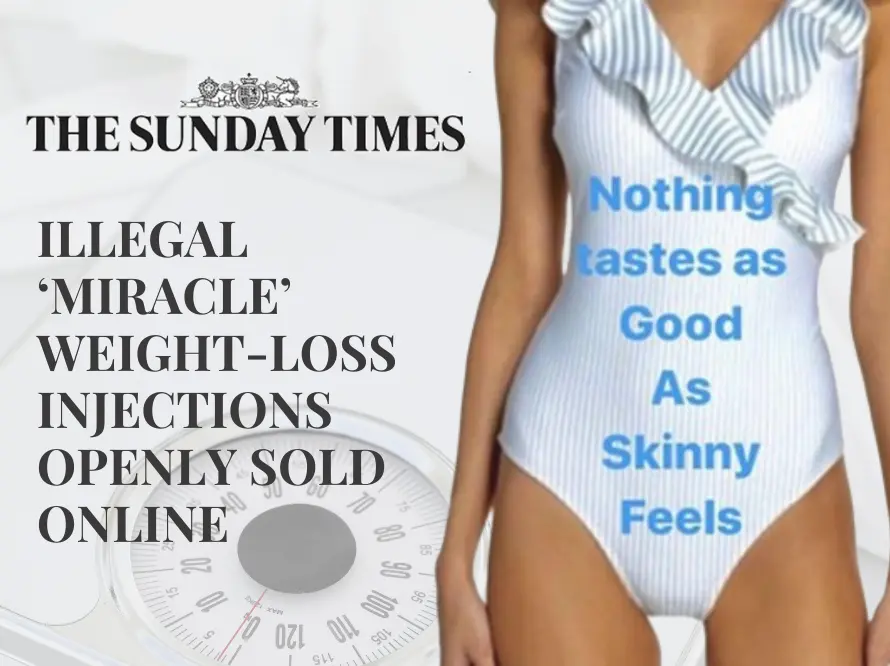
Alongside concerns about Ozempic face, there has been a sharp rise in counterfeit or illegally supplied semaglutide products. In a counterfeit product there’s a risk of having no active ingredient or an incorrect one, such as insulin instead of semaglutide. It could also contain the wrong dose, or contaminatnts that may be harmful.
Legitimate medical weight‑loss treatment in the UK should always involve:
- A clearly identified, registered prescriber (GMC, NMC, GDC or GPhC)[ED1]
- A clinical assessment and clear eligibility criteria (for example, in line with NICE guidance)
- Dispensing by a registered UK pharmacy
- Branded, dose‑controlled pens with full pharmacy labelling — not unbranded syringes and loose needles
Warning signs of unsafe or fake products include:
- Offers made through social media or direct messages
- Beauty salons or non‑medical businesses selling “diet jabs”
- No consultation or health questionnaire
- Prices that seem too low compared to reputable providers
- Packaging with spelling mistakes, missing leaflets or broken seals
- No batch number, expiry date or pharmacy label
If you suspect your pen is fake, stop using it, speak to your prescribing practitioner or pharmacist, and report concerns via the MHRA Yellow Card Scheme.
Why Choosing a Medically Qualified, Accredited Practitioner Matters
Whether you are treating “Ozempic Face” or starting GLP‑1 medication, the practitioner you choose matters more than any product name.
You should look for:
- A medically qualified professional (doctor, dentist, nurse prescriber or prescribing pharmacist)
- Registration with GMC, GDC, NMC or GPhC, the registers are public and you can search by name for your practitioner.
- Services that are regulated, either by The General Pharmaceutical Council for all pharmacies, whether physical or online, or The Care Quality Commission for all medical services
- Clear records of products used, including brand, dose and batch number
- A transparent process for follow‑up, aftercare and managing complications
Save Face independently accredits clinics and practitioners who meet robust standards on qualifications and professional registration, safe product sourcing (licensed medicines from reputable UK pharmacies), clinical environment and infection control, and consent, record‑keeping, aftercare and complication management
We do the checks patients cannot do for themselves.
To find a medically qualified, Save Face‑accredited practitioner near you, use our register today.