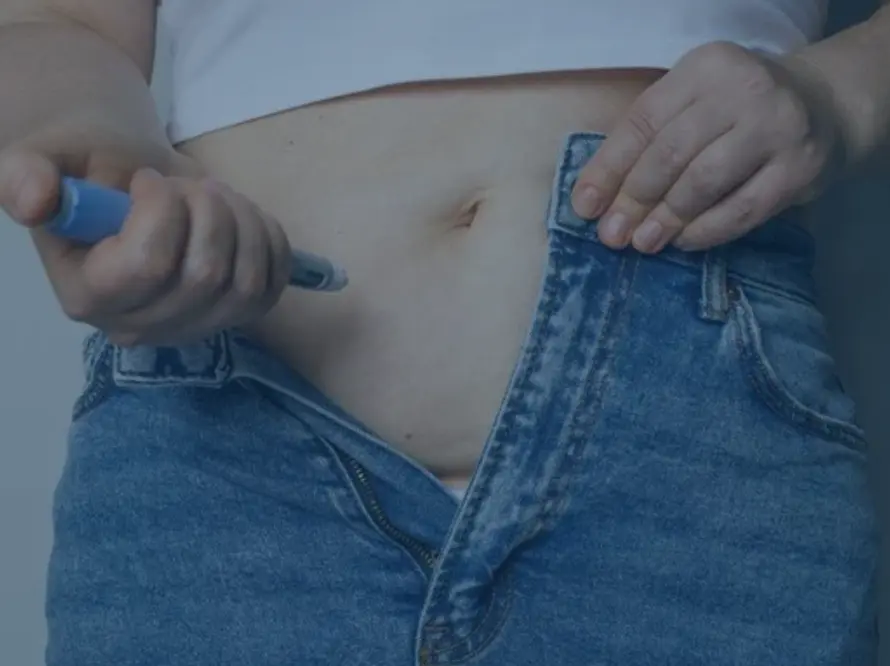


Weight loss injections containing semaglutide, such as Wegovy® and Ozempic®, or tirzepatide, sold as Mounjaro®, are prescription-only medicines in the UK. However, rising demand has created a black market in counterfeit and diverted pens sold through social media, non-medical salons and unregulated websites. Counterfeit products risk incorrect dosing, contamination and harm; this guide explains practical checks to help you spot fakes, verify legitimate suppliers, and what to do if you suspect a counterfeit.
Why are counterfeit weight loss injections dangerous?
Semaglutide and tirzepatide products are prescription-only medicines. Public advertising of named products, or any offer to supply a weight loss jab without a prescription, should be a major warning sign.
Counterfeit or diverted pens may contain the wrong active ingredient, a wrong dose, or contaminants from poor manufacturing or storage, and improper cold‑chain storage (required for many of these injectables) can make treatments ineffective and unsafe. As these medicines are injectables, and kind of mistreatment or tampering can not only damage their effectiveness, but change how your body will react.
Verify the supply chain first
Legitimate weight loss injections should be dispensed by a UK-registered pharmacy. You can ask who supplied the medicine and verify the pharmacy on the General Pharmaceutical Council register. You should also be provided the name and registration number of the prescriber. You can verify clinicians via the GMC (doctors) or NMC (nurses) registers as appropriate.
The medicine should arrive in its original packaging with a patient-specific pharmacy label showing details such as your name, the medicine, directions for use and the supplying pharmacy. Batch and expiry information should appear on both the packaging and the device. If these details are missing or inconsistent, contact the pharmacy before using the pen.
Watch for advertising red flags
POMs (prescription-only medicine) must not be marketed to the public, therefore any seller openly advertising Wegovy®, Ozempic®, Mounjaro® (or “diet jabs”) on social media or in public posts is likely operating illegally.
Private messages, group sales and influencer promotions are common channels for illicit supply, so treat these as high‑risk, and walk away if a seller doesn’t require a consultation or prescription.
How to inspect a weight loss jab
Packaging and outer box
Check the quality of the outer box, including the spelling, fonts, colours and logos, and compare it with official manufacturer images where possible. Make sure the medicine name, strength, batch number and expiry date are consistent across the box and pen or cartridge, and look for the expected patient information leaflet. You should consider poor printing, missing documentation, or altered labels as something suspicious.
Pen and cartridge inspection
Inspect the pen, cap and tamper seals for damage or signs of resealing, comparing its logos, embossed text, dose markings and serial or batch labels with official information. Pen designs vary between manufacturers and may change, so ask the pharmacy to verify any detail you’re unsure about.
Where the solution is visible, check it against the manufacturer's guidance. It’s commonly clear and colourless; if it’s cloudy, unusually coloured, or contains particles, consider these warning signs, and do not use.
Cold chain and labelling
Many formulations require refrigerated storage, so ask how the medicine was shipped and whether suitable cold-chain packaging was used. A pharmacy-dispensed product should also carry a label with the pharmacy's contact details. Visual checks cannot prove that a pen is genuine, so always verify the supply chain as well.
What to do if you suspect a weight loss jab is counterfeit
If a weight loss jab appears fake, diverted, damaged or incorrectly stored, stop using it immediately. Keep the pen, box, and all other packaging, along with receipts, messages and screenshots from the seller. Then:
- Report it to Save Face
- Report to the MHRA Yellow Card scheme (reporting helps regulators identify and remove counterfeit supply)
- Inform your GP or treating clinician—seek urgent medical advice if you experience unexpected symptoms after using the product
- Consider notifying local police if fraud or illegal sale is evident
Why choosing a medically qualified, accredited practitioner matters
Accredited clinicians perform a full clinical assessment, ensure safe prescribing, provide baseline monitoring and supervised titration, and supply medication via registered pharmacies with proper labelling and cold‑chain handling. This is essential for Mounjaro weight loss treatment and other prescription medicines that require careful titration.
Save Face‑accredited practitioners follow evidence‑based safety protocols and record‑keeping that protect patients from the risks of illicit supply. You can find accredited practitioners to administer your treatment here.
Practical checklist before you buy or accept weight loss injections
- Is there a prescription and pharmacy label?
- Is the seller a UK-registered pharmacy or a clinician verified on GMC/NMC/GPhC?
- Do batch and expiry numbers match across packaging and pen?
- Is the solution clear and as expected, in line with the manufacturer’s guidance?
- Was it shipped with cold‑chain protection (if required)?
If you answer “No” to any of these points, do not use the product, and contact the dispensing pharmacy or a healthcare professional for advice.
Categories
Related news articles