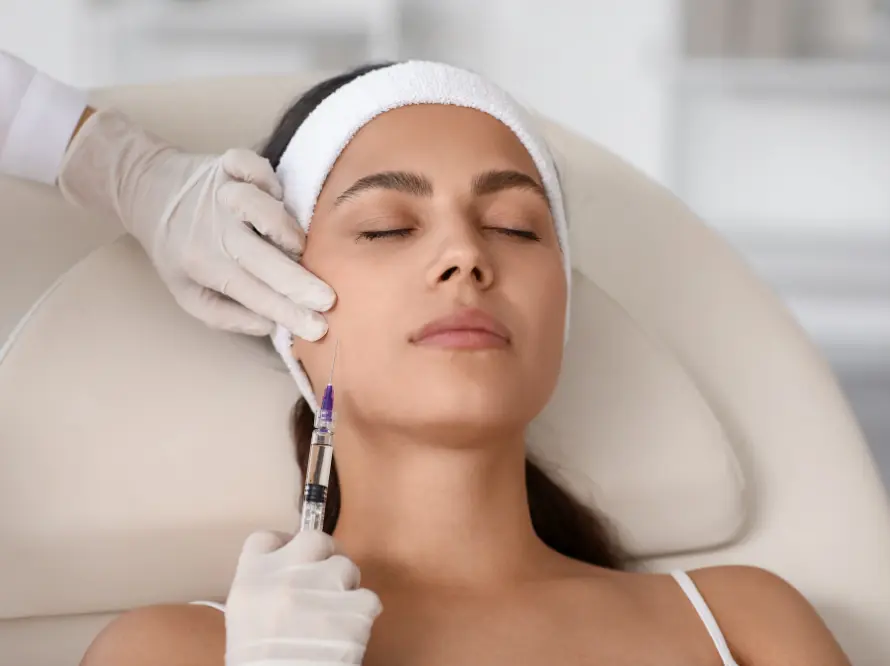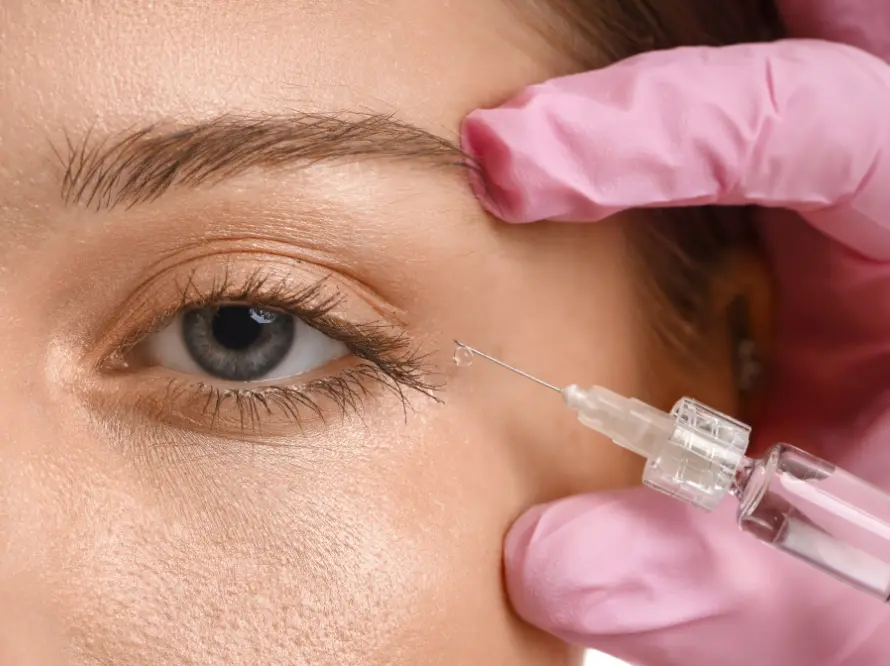


Recently published clinical studies have highlighted existing health conditions, hypersensitivity reactions, toxin resistance and antibody formation, and interactions with weight loss medication as reasons why (perhaps!) your patients may feel unwell or not be getting the results you might expect from botulinum toxin treatment. Save Face investigates the evidence trail.
It’s the feedback you dread hearing when a patient comes back to you with a complaint that their recent botulinum toxin (BoNT-A) treatment caused them to feel unwell or did not ‘work or last as well as usual’.
Changing the dose or even the brand of neurotoxin is the usual first step towards a solution, but what if other factors are at play that could be negatively impacting their interaction with BoNT-A? Could this ultimately contraindicate them for future treatment, no matter the brand?
Much of the evidence we see for touted contraindications or efficacy failings is predominantly anecdotal, due to a lack of study material or reporting. However, recently published papers have begun to ask some of the questions many of you have been ruminating on for a couple of decades.
Existing health conditions
The core of a pre-botulinum toxin treatment protocol is a thorough consultation during which the prescribing practitioner documents the patient’s full medical, aesthetic, and lifestyle history. Within that process, you will be attuned to the known underlying medical conditions that tend to contraindicate a patient for any aesthetic treatment; in the case of BoNT-A, this usually relates to underlying neuromuscular and neurological disorders where adverse events can be severe.
However, a recent UK-based cross-sectional survey, published in the Aesthetic Surgery Journal, throws several additional underlying diseases and disorders into the mix regarding the association between existing health conditions and the potential for varying severities of adverse BoNT-A effects.
The analysis, conducted by researchers at Anglia Ruskin University, examined 919 participants who received BoNT-A treatment for aesthetic purposes. The study concluded that autoimmune, endocrine, neurological, and mental health comorbidities significantly increase the likelihood of adverse outcomes, ranging from bruising and persistent ptosis to mood disturbance, neuromuscular weakness, and apparent treatment failure.[i]
Patients with type 1 diabetes were 92 times more likely to experience nausea post-treatment, chronic migraine sufferers, and those with thyroid disorders also had a 10-fold increase in the risk of nausea. Patients with cataracts were 30 times more likely to experience headaches, and those with prior injuries had a 21-fold increased risk of losing facial expression.[ii]
The authors noted that their findings “expose the myth that botulinum toxin is a trivial cosmetic procedure”, when in fact, “safe administration requires not just injection skill but diagnostic discernment, psychological insight, and systemic medical understanding”.
They highlighted that previous research has shown pain, swelling, and headache as the most common adverse events from BoNT-A treatment, with little known, until now, about which patients are most at risk from negative interactions with the neurotoxin due to their underlying medical status.
Hypersensitivity, antibodies and toxin resistance
Immune-mediated and hypersensitivity reactions, including so-called ‘Botox resistance’, are generally regarded as rare with BoNT-A treatment, but they have been reported and heavily debated for many years. Aesthetic practitioners should be aware of potential adverse reactions such as localised effects or systemic manifestations caused by hypersensitivity; however, this may not be true resistance.
Caused by the apparent formation of neutralising antibodies, resistance to BoNT-A may reduce its effectiveness by inactivating the biological activity of the neurotoxin. This could be a primary non-response where a patient fails to get an improvement from BoNT-A treatment from the very first injection and all subsequent treatments, or a secondary non-response where they derived a benefit from at least one injection/treatment but lose that benefit over subsequent injection cycles, either partially or completely, which is often attributed (rightly or wrongly) to the development of neutralising antibodies.
A clinical paper on immunogenicity associated with BoNT-A by Bellows et al in 2019, explained that antibodies against BoNT-A can be broadly divided into neutralising antibodies, targeting the core neurotoxin, impacting the function of either the heavy or light chain and effecting clinical efficacy, and non-neutralising antibodies, typically targeting accessory or complexing proteins or clinically irrelevant sites on the core neurotoxin and which do not affect clinical efficacy.[iii]
To be truly resistant due to neutralising antibody formation, a patient would need to exhibit a complete lack of effectiveness to an initial or subsequent BoNT-A treatment, as differentiated from their treatment result wearing off more rapidly, and, in theory, the neutralising antibodies formed would mean that their lack of response should be the same across all BoNT-A products, thus switching brands would be ineffective. Sometimes, a brand change can mitigate immune responses (caused by non-neutralising antibodies) that may otherwise have been labelled as a true ‘Botox resistance’ by the patient or former practitioners.
Documented cases of hypersensitivities or immune-mediated reactions highlight the importance of good medical history taking (including history of past aesthetic treatments, the products used, and over what time), appropriate patient selection, and understanding of the potential risks for certain patients before treatment, particularly those with a history of allergic reactions.
A joint Australian and Thai dermatology study from 2025 highlighted three separate cases of hypersensitivity across multiple brands of BoNT-A for discussion.[iv] They also noted that possible allergens involved in hypersensitivity reactions include the core neurotoxin, complexing proteins, excipients (e.g., human serum albumin, sodium chloride, sucrose, etc.), diluent, or manufacturing contaminants (e.g., clostridial DNA, flagellin), and suggested that the use of highly purified, low-immunogenicity formulations of BoNT-A may be preferable, particularly for patients with prior allergic histories or prolonged treatment courses.
In the first case, a 44-year-old woman in Australia developed severe angio-oedema after resuming abobotulinumtoxinA (Dysport®/Azzalure®) injections following a 12-month pause. Subsequent intradermal tests with onabotulinumtoxinA (Botox®) and incobotulinumtoxinA (Xeomin®/Bocouture®) produced localised reactions, suggesting hypersensitivity to a shared component across formulations, possibly the 150 kDa BoNT-A neurotoxin itself.
In the second case, a 38-year-old woman in Thailand with no known allergies experienced delayed erythema and swelling after letibotulinumtoxinA (Letybo®) treatment, but tolerated subsequent incobotulinumtoxinA (Xeomin®/Bocouture®) injections, suggesting possible reactivity to complexing proteins or other non-core components rather than the neurotoxin.
In the third case, a 50-year-old woman in Thailand with a history of allergic rhinitis who had been receiving annual masseter injections with prabotulinumtoxinA (Jeaveau®/Evolus®) for several years developed systemic symptoms and localised swelling after further administration of the neurotoxin in the upper face, consistent with a delayed-type IV hypersensitivity reaction.
The authors concluded that, although rare, BoNT-A hypersensitivity should not be regarded as causing minimal harm, or as inconsequential, or not reportable. For ongoing vigilance and clinical significance monitoring, aesthetic practitioners are urged to report any cases they come across.
Citing many of these studies in their BoNT-A product literature and licensing, manufacturers concur that more frequent intervals between treatments or higher doses may increase the incidence of neutralising and non-neutralising antibody formation, leading to recommendations that practitioners use the lowest effective dosing strategies and the longest clinically indicated treatment intervals.[v]
Interaction with GLP-1 RAs
The overnight rise in demand and availability of Glucagon-like peptide 1 receptor agonists (GLP-1 RAs) for weight loss has been phenomenal to witness for the medical specialty, to the point where primary care also got on board quickly, offering NHS-based provision to the neediest.
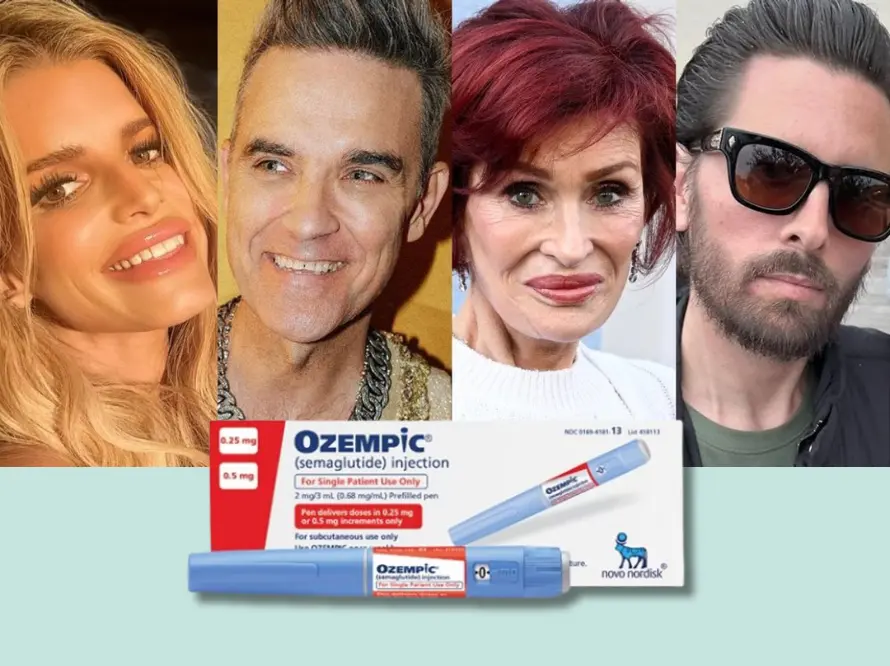
These so-called ‘miracle drugs’, including liraglutide (Saxenda®), semaglutide (Ozempic®/Wegovy®), and tirzepatide (Mounjaro®), are so desired by the public – many of whom do not fit appropriate prescribing criteria – that the numbers taking the medications and the number of private providers (including illicit) have skyrocketed. Certainly, it’s now become quite regular to see patients answer ‘yes’ when prompted about their use of GLP-1 RAs during medical questionnaires and consultations.
To date, the pharmacodynamic interactions between GLP-1 RAs and many other medications, including BoNT-A has been unknown. Positive or negative, we have been set on a journey of discovery, and clinical data is slowly emerging. A global, multi-centre study was published at the end of 2025, discussing the evidence for reduced treatment durability for BoNT-A across both neurologic and aesthetic indications due to the impact of GLP-1 RAs on the neurotoxin.[vi]
The authors used the AesthetiSIM™ microsimulation platform, a transparent, parameterised in-silico model developed to estimate whether GLP-1-related changes in metabolism and neuromuscular recovery could alter toxin durability. Twenty-five thousand virtual patients were generated, representing two domains of BoNT-A use: chronic migraine (n = 20,000) and masseter prominence (n = 5000). Virtual subjects were randomly assigned to semaglutide, tirzepatide, liraglutide, dulaglutide, or control conditions, and simulated over one year under standardised 100-unit BoNT-A dosing. Their modelling and analysis showed that BoNT-A duration declined in both domains across GLP-1 RA exposure compared to controls, with early wear-off times varying by the specific GLP-1 RA. Sensitivity analyses indicated that approximately 55% of the reduction in duration was attributable to synaptic modulation, 30% to lean-mass decline, and 15% to metabolic variability.
Their results were exploratory and derived entirely from computational modelling rather than clinical observation. However, findings did suggest a biologically plausible interaction between GLP-1 RA signalling and BoNT-A recovery dynamics. This may be the impetus for additional studies that validate these findings in real patient cohorts over the next year or so.
Certainly, if you have patients taking adjunctive GLP-1 RAs, you may be advised to warn them of the potential for shortened BoNT-A duration whilst they remain on weight loss medication or to consider alternative advice and treatment options if longevity is poor.
Conclusion
When delivering successful BoNT-A treatments, one clear theme runs through all the factors we have discussed that can impact treatment efficacy. Clinicians must undertake a thorough consultation and be mindful of appropriate patient selection. Assess pre-existing medical conditions, predispositions to allergic reactions, current medication use, and the patient’s history of aesthetic treatments. Being informed will directly impact patient safety, dosing strategies, and expectations for success or contraindication.
References
[i] Roshan Ravindran, Masoud Rahmati, José Francisco López-Gil, Dong Keon Yon, Damiano Pizzol, Julia Gawronska, Fiona Richardson, Helen Keyes, Yvonne Barnett, Laurie Butler, Lee Smith, The Association Between Existing Health Conditions and Adverse Events From Botulinum Toxins: Findings From a UK Cross-sectional Survey in 2024, Aesthetic Surgery Journal, 2025;, sjaf217, https://doi.org/10.1093/asj/sjaf217
[ii] ARU: Health issues linked to cosmetic jab complications (8 Jan 2026) - https://www.aru.ac.uk/news/health-issues-linked-to-cosmetic-jab-complications
[iii] Bellows S, Jankovic J. Immunogenicity Associated with Botulinum Toxin Treatment. Toxins (Basel). 2019 Aug 26;11(9):491. doi: 10.3390/toxins11090491. PMID: 31454941; PMCID: PMC6784164. https://pmc.ncbi.nlm.nih.gov/articles/PMC6784164/
[iv] Buchholz E, Wanitphakdeedecha R, Jaturawichanant S, et al. (October 31, 2025) Hypersensitivity Reactions Associated With Aesthetic Botulinum Toxin A Injections: A Case Series. Cureus 17(10): e95795. doi:10.7759/cureus.95795 https://www.cureus.com/articles/403214-hypersensitivity-reactions-associated-with-aesthetic-botulinum-toxin-a-injections-a-case-series#!/
[v] SPC: BOTOX 100 Allergan Units Powder for solution for injections - https://www.medicines.org.uk/emc/product/859/smpc
[vi] Rahman E, Michon A, Rao P, Ahmed M, Joseph JH, Wu WT, Carruthers JD, Webb WR. Computational modelling the impact of GLP-1 receptor agonists on botulinum toxin A: Evidence for reduced treatment durability across neurologic and aesthetic indications. Toxicon. 2026 Jan;269:108638. doi: 10.1016/j.toxicon.2025.108638. Epub 2025 Oct 29. PMID: 41173332. https://pubmed.ncbi.nlm.nih.gov/41173332/
Categories
Related news articles