

Videos recently featured on Instagram, from surgeons and aesthetic ‘influencers’, have been stirring up online conversations and rumours with claims that having Sculptra® treatment means you can’t have a (successful) facelift later. Save Face investigated the rumours and the latest clinical insight to discover what isn’t being explained on social media.
A couple of years ago, a well-known American plastic surgeon, Dr Nayak, posted a video on Instagram in which he compared two facelift surgeries he had undertaken. Demonstrating the patients' underlying tissue structure mid-surgery, he highlighted that one patient had a history of hyaluronic acid fillers and the other a history of Sculptra. Although, at the time, Dr Nayak admitted to Allure magazine, when his post quickly went viral, that his goal “wasn’t to start a controversy”, it did serve to show a difference in tissue appearance and spark debate.
Dr Nayak pointed out that negative impacts on underlying facial tissue can occur with long-term use of other collagen-stimulating products or tissue tightening technologies, but that each patient is different. He advised that non-surgical interventions, which can alter the tissue, can impact the predictability and complexity of future facelift surgery. However, it’s fair to say that his viral video left a bit of a finger pointing at Sculptra.[i]
Fast forward to an episode of the niptuckpod podcast last summer, which drew reference to Dr Nayak’s video (since deleted from Instagram), and the cat was truly put amongst the pigeons once more. The presenters incorrectly claimed not only that Sculptra ‘melted’ the layers of dermal tissue within the face, but that it also precluded individuals from any future facial lift surgery, stating “facial surgeons will not touch you if you admit to having Sculptra”. Most of the comments following this podcast episode rightly chose to point out the misleading nature of their representation of Sculptra.[ii]
What is Sculptra?
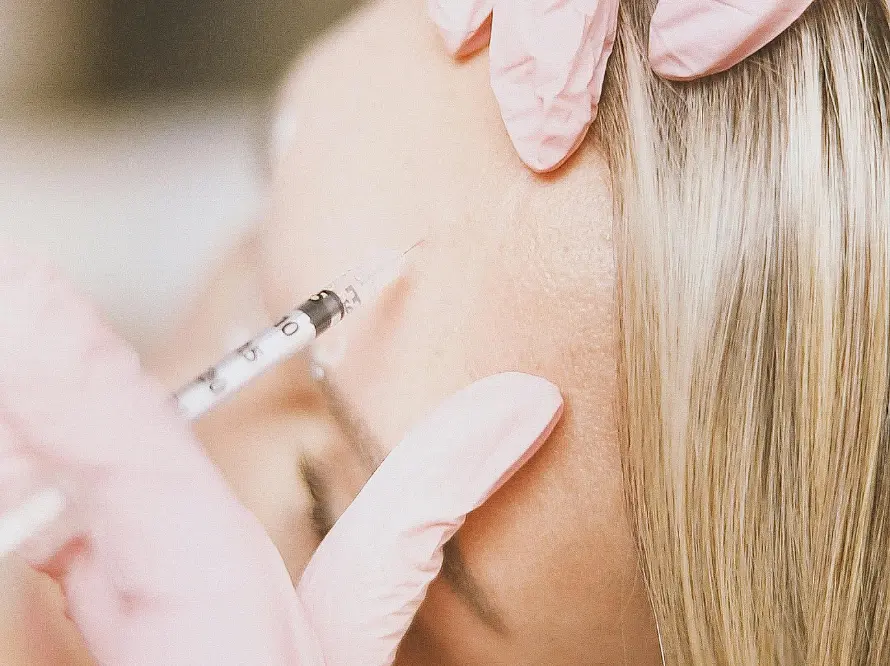
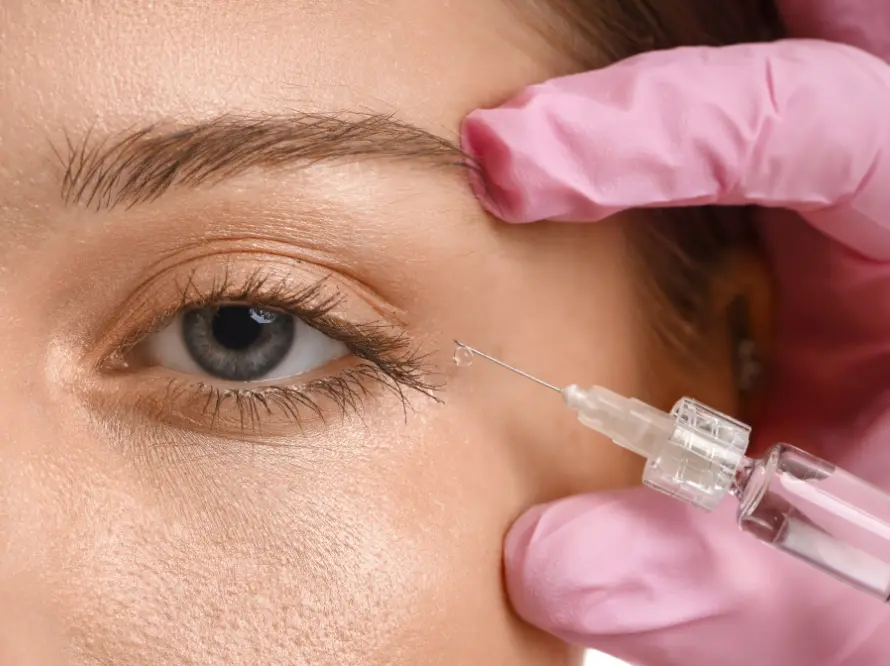
Firstly, Sculptra is not the same as your average dermal filler product; it’s not a dermal filler at all, but rather a biostimulator. Made from poly-l-lactic acid (PLLA), once injected, it works by stimulating the body’s own natural collagen production to repair and rebuild lost facial tissue volume.
Unlike hyaluronic acid (HA) dermal fillers, PLLA does not produce an immediate ‘plumping effect’; moreover, improvements in volume build up slowly over the weeks and months after treatment as healing responses are enacted in the cells. By encouraging the gradual formation of new tissue, through fibroblast stimulation, tightening dermal layers and increasing volume with collagen fibre creation at the injection sites, results can be both natural and long-lasting for several years, compared to HA gels, which are ultimately designed to degrade and be metabolised, although data now shows these can persist in the tissue for longer than expected.[iii]
The controversy with future facelift surgery
The historical use of any dermal filler or biostimulatory product should factor into any future surgical planning; however, it’s fair to say that there might be a clear distinction between the interactions of biostimulators and traditional dermal fillers. Controversy surrounding the potential negative impact of biostimulators has grown because visible tissue changes are subtle from the outside, are deemed semi-permanent, and are not always predictable, especially when treatment is poorly executed by unqualified practitioners.
On Instagram and Reddit, you will easily find people claiming anything from “it ruined my face”, or “it’s all lumpy”, to “now I can’t ever have a facelift.” Such posts reflect their frustration and high emotion, but they don’t tell the full medical story. Often, issues encountered are not exclusively because of the product, but down to the treatment delivery - practitioner injection techniques, and aftercare, from dilution volumes (which have been modified over the years), the depth of the needle tip and product placement (which should be in the deeper subcutaneous tissue), to post-procedural massage (where a specific 5-5-5 protocol is required to evenly distribute the product and avoid nodule formation – 5 times per day, for 5 minutes, for 5 consecutive days post-treatment).[iv]
If Sculptra is placed too superficially, for example, decades of clinical data have shown that nodules or lumps can form, although newer dilution protocols and massage techniques have reduced this incidence.[v] Nodules are likely more visible and may account for some of the online distress, but biostimulators, like PLLA, may globally affect the texture of the underlying tissue and how a plastic surgeon ought to approach the treated area, bearing in mind the integration of the collagen stimulator with the natural tissue, when planning facelift surgery.
However, there is no solid evidence that Sculptra automatically contraindicates a person from future facelift surgery. Organisations like the American Society of Plastic Surgeons (ASPS) have pointed out that cosmetic injectables in general, including biostimulators, don’t ruin or automatically complicate a facelift outcome per se.
However, plastic surgeons do anecdotally note that if a patient has had lots of biostimulator injections, it can make the tissue feel and appear different, with scar-like fibrosis, and cause them to take extra time to dissect during surgery; this is just a matter for pre-surgery awareness, skill, and something they can factor into their surgical plan, and not a contraindication.[vi]
Similarly, a 2023 survey of plastic surgeons from The Aesthetic Society asked members about the potential effects of repetitive pan-facial filler injections (which included HA and biostimulators like PLLA and calcium hydroxylapatite) on subsequent facelift surgery. About half believed that the products increased the difficulty of performing a facelift, and almost 40% felt that a history of pan-facial fillers increased the potential for postoperative complications.
The authors concluded that although there may be a potential association, the exact effect on postoperative complications remains unclear, pending further research.
Certainly, the survey gives a greater understanding from the perspective of plastic surgeons, but it does not isolate PLLA or Sculptra as specifically worse than a history of ANY cosmetic injectable treatments, and highlights that “an understanding of the properties of each filler material plays an important role during preoperative discussions with potential facelift patients. If there is any uncertainty in a patient's filler history or concern of previous filler complications, then it may be advisable for the patient to wait longer than the expected duration of effect before undergoing a facelift.”[vii]
All-in-all, a cautious approach is the recommendation, and this is not about plastic surgeons ‘having a go’ at a non-surgical option. In fact, research suggests that some have embraced the use of PLLA as an adjunct to successful facelift surgery to safely aid volume restoration before and after a facelift.[viii]
Conclusion
Despite the plethora of articles and social commentary, there is no clinical evidence to support the theory that PLLA directly worsens facelift outcomes, contraindicates patients, or increases failure rates.
Certainly, and anecdotally, it can make facial surgery more complex, but any history of cosmetic injectables or energy-based device treatment can do this, simply by virtue of altering the anatomy compared to that of a patient with ‘virgin’ anatomy, who has never had any cosmetic intervention, surgical or non-surgical. We could not substantiate any inherent rule that would mean Sculptra use ‘shuts the door’ on any future facelift. It might be time to put this rumour to bed.
References
[i] Allure Magazine: Getting Injectables Now Could Complicate a Facelift Later (June 2024) - https://www.allure.com/story/injectables-effects-on-facelifts
[ii] Instagram: niptuckpod - https://www.instagram.com/p/DJQwtFpIneL/
[iii] Master M, Roberts S. Long-term MRI Follow-up of Hyaluronic Acid Dermal Filler. Plast Reconstr Surg Glob Open. 2022 Apr 13;10(4):e4252. doi: 10.1097/GOX.0000000000004252. PMID: 35433153; PMCID: PMC9007185. https://pmc.ncbi.nlm.nih.gov/articles/PMC9007185/
[iv] Galderma USA: Sculptra Aesthetic Instructions for Use / Patient Brochure, Patient Instructions Section - https://www.galderma.com/us/sites/default/files/2019-01/Sculptra_Aesthetic_IFU.pdf
[v] The Dermatologist: Dermal Filling Agents: Evaluating More Choices for Your Patients, Sculptra/NewFill By Leslie Baumann, M.D. (June 2007) - https://www.hmpgloballearningnetwork.com/site/thederm/article/7322
[vi] ASPS: Does early filler and Botox use complicate future facial plastic surgery procedures? (Sept 2025) - https://www.plasticsurgery.org/news/articles/does-early-filler-and-botox-use-complicate-future-facial-plastic-surgery-procedures
[vii] Sweis L, DeRoss L, Raman S, Patel P. Potential Effects of Repetitive Panfacial Filler Injections on Facelift Surgery and Surgical Outcomes: Survey Results of the Members of The Aesthetic Society. Aesthet Surg J Open Forum. 2023 Feb 6;5:ojad010. doi: 10.1093/asjof/ojad010. Erratum in: Aesthet Surg J Open Forum. 2023 Mar 27;5:ojad025. doi: 10.1093/asjof/ojad025. PMID: 36860684; PMCID: PMC9969530. https://pmc.ncbi.nlm.nih.gov/articles/PMC9969530/
[viii] O'Daniel TG, Kachare MD. The Utilization of Poly-l-Lactic Acid as a Safe and Reliable Method for Volume Maintenance After Facelift Surgery With Fat Grafting. Aesthet Surg J Open Forum. 2022 Mar 4;4:ojac014. doi: 10.1093/asjof/ojac014. PMID: 35662905; PMCID: PMC9153375. https://pubmed.ncbi.nlm.nih.gov/35662905/
Categories
Related news articles