

If you feel self-conscious about showing too much of your gums and teeth when you smile, you may be considering Botox for gummy smile treatment. When performed correctly, this solution can produce subtle, natural-looking results that lower the upper lip and allow you to smile with confidence. However, it is also one of the most technically demanding uses of botulinum toxin, because it involves carefully treating muscles that are essential for both facial expression and mouth control.
Unlike treating forehead lines or crow's feet, this is an off-label (off-licence) use of Botox that requires careful patient assessment, precise dosing, and an excellent understanding of facial anatomy. Choosing an experienced medical practitioner who is well-versed in gummy smile correction safety is essential to achieve a balanced result while protecting your natural smile. Similarly, Botox for gummy smile is not the same as a Botox lip flip, or gummy smile lip filler, and we’ll explain the difference.
What is a Gummy Smile?
A gummy smile, and its medical name, “excessive gingival display”, describes excessive visibility of the upper gum tissue when smiling. While there’s no strict medical definition, most healthcare professionals consider more than 3 to 4 mm of exposed gum tissue to be a gummy smile. Not everyone who shows their gums when smiling needs or wants treatment. Many people naturally have beautiful smiles with some gingival display, but if it affects their psychological or psycho-social behaviour, then treatment may be appropriate and recommended.
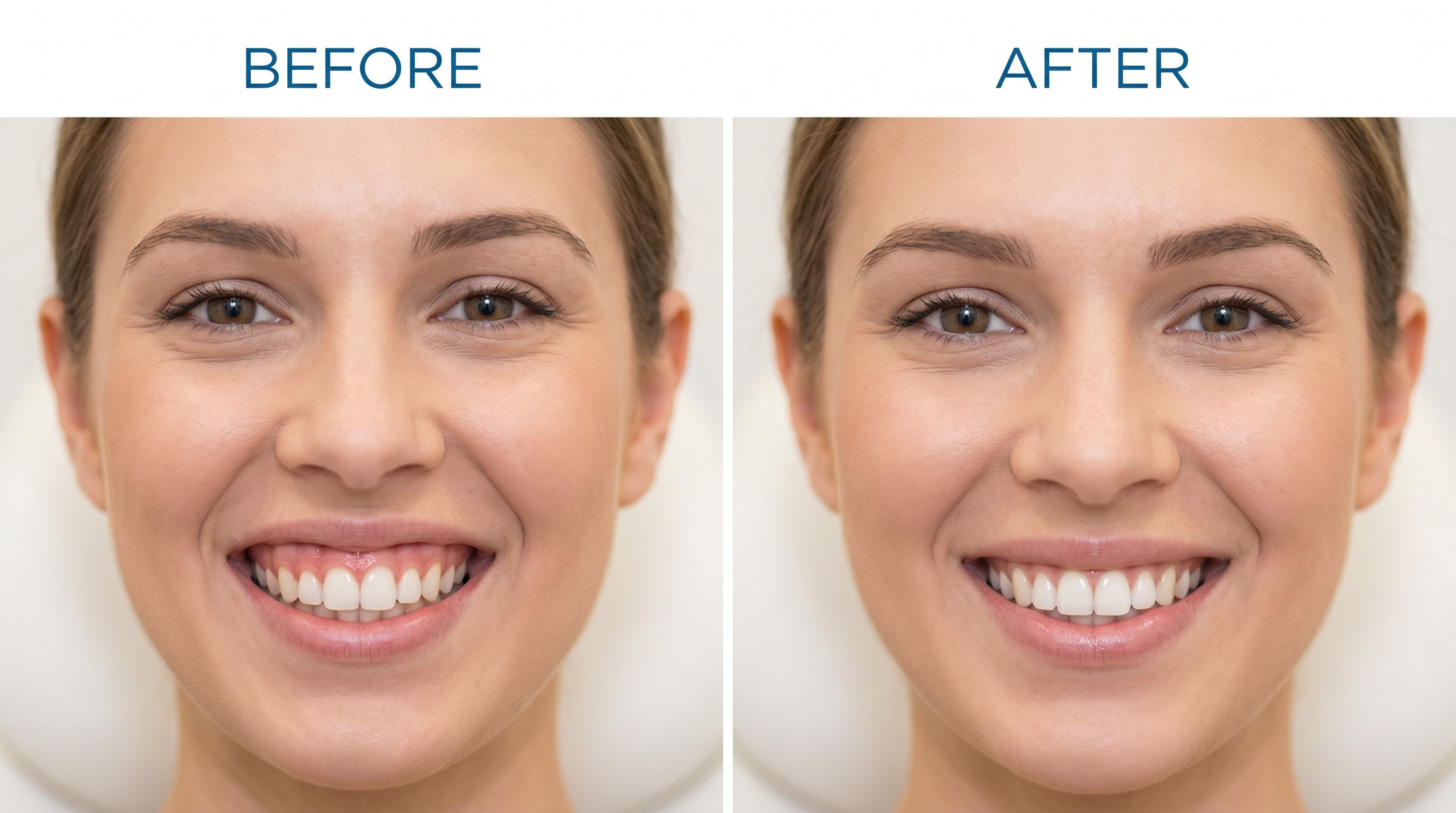
A gummy smile is a cosmetic concern and rarely a medical problem, but it’s interesting to know why it happens. A gummy smile may be caused by an overactive or hypermobile upper lip being pulled up too high by the muscles that control it. Other causes include:
- a naturally short upper lip
- the way the teeth erupted or emerged, which left them partially covered by gum tissue
- gum tissue overgrowth or enlargement known as gingival hypertrophy
- the position and shape of the upper jaw, which causes the upper gums and teeth to protrude downward
Different facial anatomy, orthodontics, and distinct causes of a gummy smile mean that off-label use of Botox is not suitable for everyone. Some people may be better treated by a dentist, orthodontist, or maxillofacial surgeon rather than with injectable treatments.
How Does Botox for Gummy Smile Work?
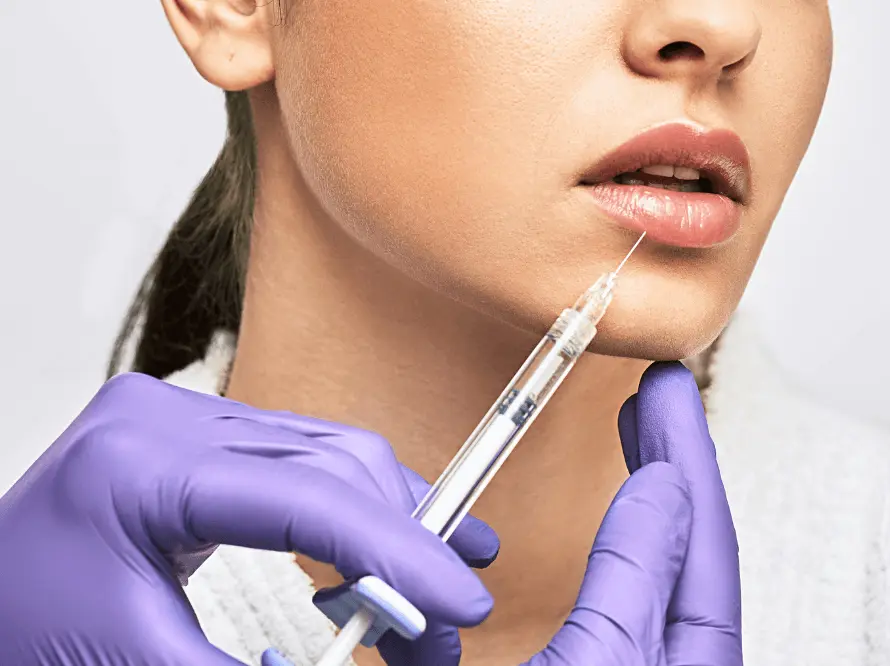
When a gummy smile is caused by overactive upper lip-lifting (or elevator muscles), Botox can temporarily relax these muscles so the upper lip doesn’t lift quite as high when smiling.
The main target is the levator labii superioris alaeque nasi (LLSAN) muscle, often referred to as the “Elvis muscle” in reference to the upper lip curl or snarl made famous by the singer. The LLSAN is a small muscle that runs alongside the nose and plays a key role in lifting the upper lip. By carefully weakening its action, the upper lip sits slightly lower when you smile, reducing the amount of gum that’s visible while preserving normal facial movement. The effect is intentionally subtle. The aim isn’t to stop you from smiling, but to soften excessive upper-lip elevation to avoid gum show and create a more balanced smile.
Because Botox for gummy smile is an off-label or unlicensed use of botulinum toxin, aesthetic practitioners and prescribers must assess each patient individually as part of good prescribing practice, and discuss the expected benefits, limitations, and potential risks of off-label use before considering and recommending treatment.
Results from Botox for gummy smile usually become noticeable within several days to a week, with the full effect developing after approximately two weeks. The improvement in gum display on smiling is temporary and typically lasts about 3 to 4 months, though this varies from person to person. Repeat treatments are needed to maintain the result.
Why Gummy Smile Treatment UK Demands Precision
Treatment for a gummy smile targets one of the smallest treatment areas on the face, so even tiny differences in dose or injection placement can noticeably affect your smile.
The muscles around the mouth work together every time you speak, eat, drink, and smile. If Botox spreads into neighbouring muscles or too much product is used, you may experience an unnatural smile, asymmetry (lopsidedness), or temporary weakness around the mouth that can affect speech, drinking, or eating.
Experienced medical aesthetic practitioners, therefore, often use very small doses of botulinum toxin. This is sometimes referred to as microdosing, and allows the practitioner to carefully assess how your muscles move before injecting more units, if required, at a review appointment. An approach that includes accurate muscle identification and conservative dosing is key to achieving predictable outcomes for Botox for gummy smile treatment. Treating this area should never be approached as a routine cosmetic injection by the untrained; it is an advanced botulinum toxin treatment that requires additional training and appropriate prescribing consideration.
Botox for Gummy Smile Versus a Botox Lip Flip
It’s very easy to confuse Botox for gummy smile with a botox lip flip or gummy smile lip filler, but they’re designed to treat different concerns.
A Botox lip flip, also referred to as gummy smile lip filler, targets the orbicularis oris muscle that surrounds the lips. The aim is to gently roll the upper lip outwards, making it appear slightly fuller without adding volume with dermal filler. The reference to lip filler in the term ‘gummy smile lip filler’ is due to the product used, rather than reshaping the lip in any way.
By comparison, Botox for gummy smile treatment targets the lip elevator muscles higher up alongside the nose. The goal is to reduce how high the upper lip rises when smiling rather than changing the shape of the lip itself.
Although both treatments use botulinum toxin, they involve treating different muscles, use different techniques, and have different treatment goals.
Of course, some people may benefit from both treatments, but only after a thorough facial assessment by an appropriately qualified medical practitioner, because, again, both treatments are off-label uses for Botox.
Gummy Smile Correction: Safety Comes First
A thorough consultation should ensure gummy smile correction safety and include an assessment of your facial anatomy, muscle movement, dental health, and medical history.
In the UK, Botox is a prescription-only medicine and a face-to-face consultation with an authorised prescriber – a doctor, dentist, independent nurse prescriber, or prescribing pharmacist - should ALWAYS form part of the treatment process. Your prescriber and practitioner should explain that this will be an off-label use of Botox, discuss possible side effects, and determine whether Botox is the right solution for your type of gummy smile.
Botox alone may not deliver the result you’re hoping for if your gummy smile is caused by:
- jaw position
- gum overgrowth
- dental factors
In these circumstances, your practitioner will likely refer you to another specialist. Whichever approach you decide to opt for, remember that gummy smile correction safety depends far more on the person performing the injections than on the botulinum toxin itself.
Choosing a Safe Gummy Smile Treatment UK Provider
Gummy smile treatment should not be trivialised or offered as a one-size-fits-all solution. The best outcomes come from an accurate diagnosis, conservative treatment planning for an off-label indication, and expert anatomical knowledge from a qualified practitioner.
Look for a medical professional, preferably a prescriber, who has advanced training in facial anatomy, understands the functional muscles around the mouth, and carries out a detailed consultation before recommending the treatment of Botox for a gummy smile. They should also be able to manage complications if they occur and recognise when another type of treatment would be more appropriate for any dental concerns.
If you’re considering gummy smile treatment UK, start by finding a Save Face-accredited practitioner who can properly assess your smile and recommend the safest option for you.
At Save Face, every accredited clinic has been independently assessed against robust standards covering practitioner qualifications, patient safety, clinical governance, and ongoing support. Choosing a Save Face-accredited practitioner gives you confidence that your gummy smile treatment is being carried out by someone who places safety and ethical practice first.
Categories
Related news articles