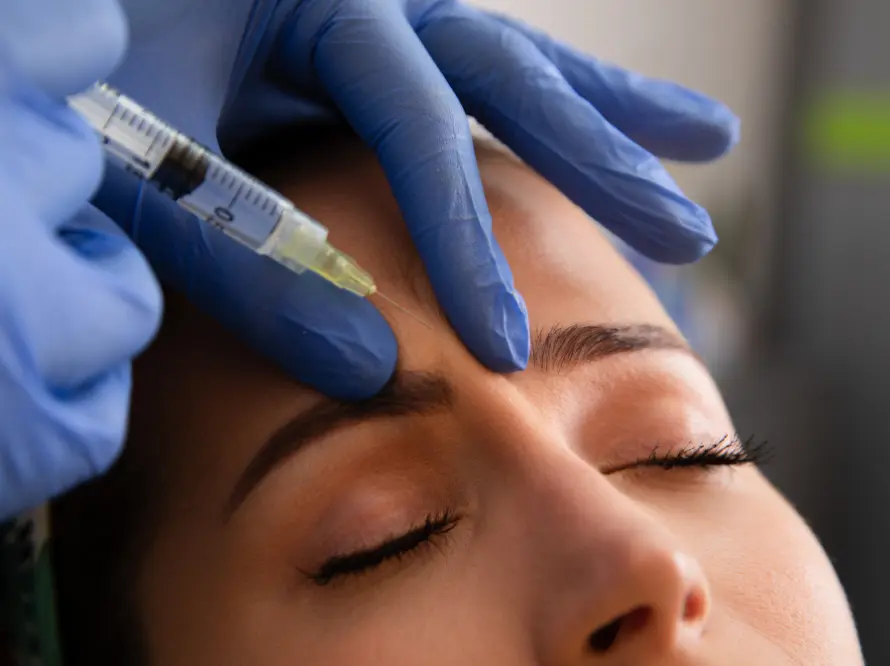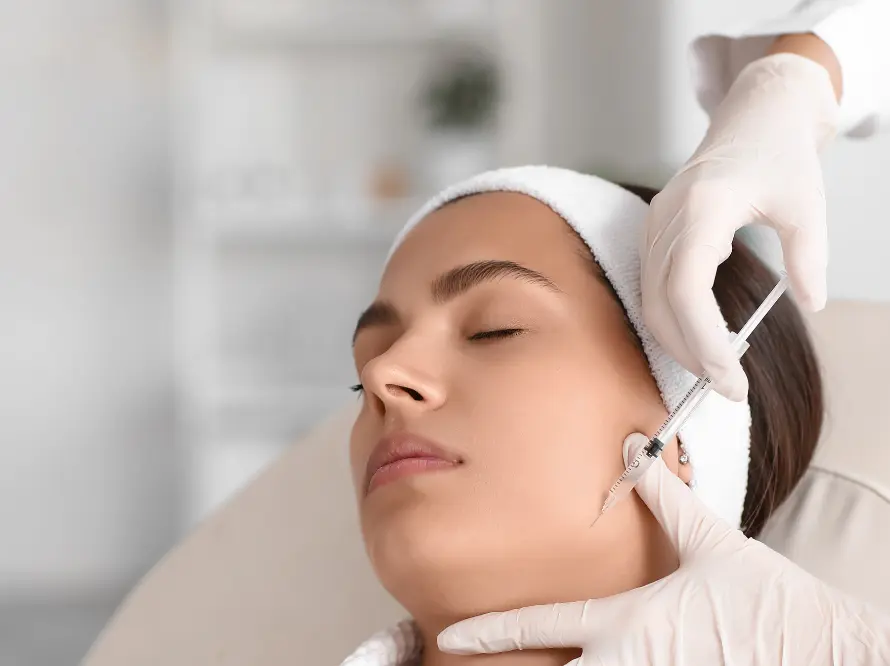


If you’re preparing for your first appointment for Botox treatment, understanding what happens in the hours, days, and weeks afterwards can help you feel more confident going in. It helps to know what’s normal, and more importantly, equips you to recognise what might be an unwanted side effect that requires medical follow-up. To achieve safe and effective results from Botox treatment, you must also follow any Botox aftercare your practitioner provides.
Botox® is the brand name for a type of botulinum toxin type A, a prescription-only medicine used to temporarily relax targeted muscles as an anti-wrinkle or anti-ageing treatment. In the UK, it can only be prescribed following a face-to-face consultation with an appropriately trained and qualified prescribing healthcare professional, such as a doctor, dentist, independent nurse prescriber, or prescribing pharmacist. A remote consultation over the telephone, video call, or by email is not permitted. Before your treatment, you should always know who the prescriber is and who will be carrying out your injections, especially if it is not the same person.
Whether you’re getting anti-wrinkle treatment for forehead lines, frown lines, or crow's feet, following the correct Botox aftercare advice and getting first-time Botox tips for information on the Botox side effects timeline helps reduce the risk of complications and supports the best possible outcome.
What not to do after Botox
As part of the appropriate Botox aftercare, your practitioner will advise you on what not to do after Botox treatment, especially during the first 24-48 hours, to mitigate the risk of preventable side effects. Advice is likely to include:
- Avoid rubbing or massaging the injection sites. This may increase the chance of the botulinum toxin spreading to nearby untreated muscles. Repeatedly touching the area could also introduce infection. This also means that you should refrain from applying makeup immediately after treatment.
- Avoid strenuous exercise, heavy lifting and activities that significantly increase your heart rate. Increased blood flow may increase bruising.
- Avoid other facial aesthetic, beauty, spa, or massage treatments that risk rubbing or applying pressure to your face and the treated areas. Other treatments should be avoided for a minimum of two weeks whilst the Botox treatment is activating.
- Avoid excessive heat, such as saunas, steam rooms, hot tubs, or sunbathing. Heat increases blood flow, which can increase bruising and swelling.
- Avoid wearing tight caps, hats, or other headgear, including sleep masks, that can compress your forehead and adversely affect the placement of the Botox.
- Avoid alcohol consumption, as this can thin the blood and increase the likelihood of bruising.
- You may also be advised to avoid flying (especially long haul) in the first couple of days after Botox treatment. This is because reduced cabin pressure, as well as changes in air flow and oxygen levels in the plane, can increase bruising and swelling in some people. However, there is no direct safety concern with flying after Botox treatment.
What not to do after Botox is mostly about avoiding pressure, heat and strenuous activity while the treatment settles, but your practitioner will always give you specific advice.
Understanding the Botox side effects timeline
Knowing the typical Botox side effects timeline can help you distinguish between expected reactions or changes and any unexpected symptoms or adverse effects that require medical advice.
Immediately after treatment
Your appointment will usually take between 15 and 30 minutes, and you can return to most normal daily activities straight afterwards.
It’s common to notice small, raised bumps at the injection sites where the product dose has been placed. These usually settle quickly, often within less than half an hour. Mild redness, swelling, or tenderness are also normal and generally disappear quickly.
Some people develop slight bruising, particularly if small blood vessels are affected during the injection. This is most likely to occur around the eyes, where the skin is thinner, if crow’s feet or lateral canthal lines have been the target.
The first four hours
Your practitioner will advise you to remain upright, keeping your head up, for at least four hours after treatment. You should avoid lying flat (even lying back in a reclining chair), lots of bending down, or putting pressure on the treated area.
These Botox aftercare instructions are designed to minimise the already low risk of unwanted botulinum toxin diffusion or spread. Different brands of botulinum toxin have different diffusion rates, so discuss this with your practitioner if you have concerns.
There is some evidence to suggest that mild facial exercises during the first few hours after treatment, such as frowning or raising your eyebrows, can help improve the distribution of the botulinum toxin to the targeted muscles.
The first 24 hours
One of the best first time Botox tips to achieve the best results is to keep your routine simple, especially during the first day of treatment.
It’s not uncommon to experience a mild headache, feel a bit flu-like, or have a feeling of tightness across the forehead during the first day. This will be temporary, typically lasting for 24 to 48 hours, and will settle without treatment.
Days two to seven
Botulinum toxin does not work instantly. Most people notice the first signs of muscle relaxation after three to five days, but this will not yet show the full result.
During the first week, your facial expressions may gradually soften and lessen, rather than changing overnight. This is completely normal.
If you notice one side of your face responding slightly faster than the other, there’s usually no reason for concern. Small differences often even out as the treatment reaches its full effect. Although in some cases, a minor adjustment may be recommended at a follow-up appointment.
Two weeks after treatment
Around fourteen days after your treatment appointment, your Botox results should be fully established.
Many clinics schedule a review appointment at this stage of your Botox aftercare, particularly for first-time patients, because it helps to establish the optimal dosing strategy and injection pattern for your face. This may differ slightly from the prescribed pattern or dose. Men, for example, often require a higher dose of botulinum toxin than women due to having a stronger musculature.
Your practitioner will assess the results of your treatment, ask you to perform various facial movements or expressions, and determine whether any small adjustments are appropriate.
This review process is an important part of safe prescribing and good clinical practice. You’re not being invited for a “top-up”, per se, to make your treatment last longer [GE1] or work better; it’s very likely that “extra” Botox will not be required. However, additional Botox units may be used if there is any asymmetry (lopsidedness) or other unexpected and treatable side effects. Another example of this is so-called “Spock brows”, where the outer eyebrow has an excessive upwards arch that requires softening with a couple of extra Botox units.
Understanding adverse effects
Serious complications are uncommon when treatment is carried out by an appropriately trained medical professional using UK-licensed and approved brands of botulinum toxin.
However, you should contact your practitioner promptly if you experience anything that concerns you, including:
- increasing pain
- significant swelling
- difficulty swallowing
- vision changes
- muscle weakness away from the treated area
- a drooping eyelid (ptosis)
Choosing safety first for your Botox treatment
You can continue to prepare for your treatment and ensure it’s right for you by reading our full guide to anti-wrinkle injections. But remember: your first Botox experience depends as much on your practitioner as it does on the treatment itself. One of the most important first time Botox tips is to take your time researching and finding a qualified practitioner that you feel comfortable with.
Botulinum toxin is a prescription-only medicine. It should never be administered without an appropriate face-to-face consultation, and your prescription should always be dispensed by a pharmacy in your name. A thorough assessment with a prescriber – a doctor, dentist, independent nurse prescriber, or prescribing pharmacist – should include your medical history, treatment goals, and a discussion of potential risks and realistic expectations before any treatment takes place. This discussion may be delegated to another trained practitioner.
If you’re considering your first Botox treatment, choosing a practitioner and clinic that meets recognised standards of training, prescribing and patient safety is one of the best decisions you can make.
Save Face independently assesses clinics and practitioners against robust clinical and safety standards. We want to give you the confidence that your treatment is provided by professionals who put patient welfare first, and practice legally when it comes to prescribing and sourcing botulinum toxin.
If you are ready to begin your Botox journey, you can read more about anti-wrinkle injections and use the Save Face register to find an accredited practitioner near you.
Categories
Related news articles