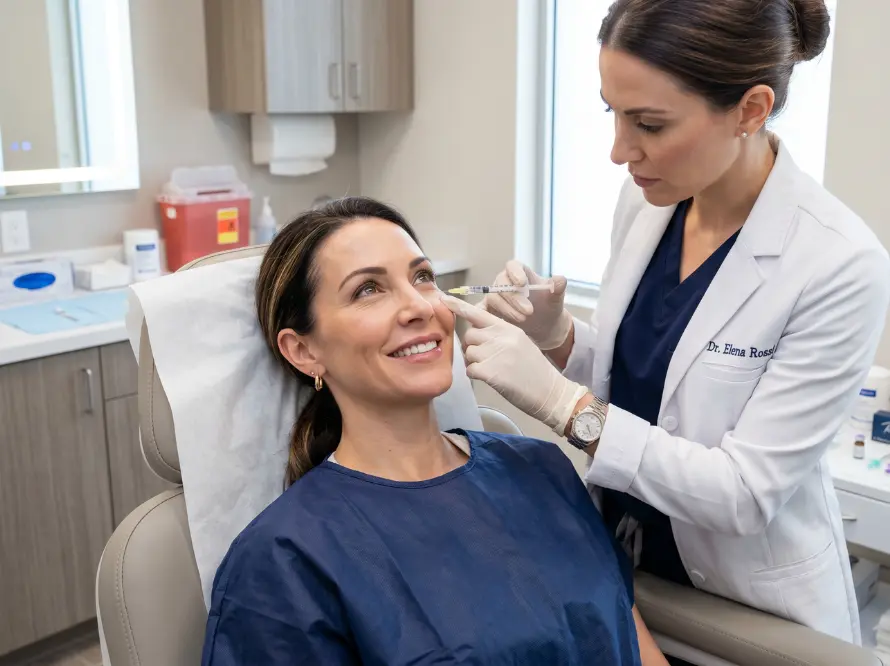


Non-surgical rhinoplasty, often referred to as a ‘liquid nose job’, is a procedure that uses dermal filler to alter the shape and contours of the nose without plastic surgery or a lengthy recovery time.
For those who are unhappy with their nose because of bumps, humps, asymmetry, or minor contour irregularities, non-surgical rhinoplasty can offer an attractive alternative to traditional surgery. However, while the treatment is often promoted as taking only 15 minutes to perform, it’s not actually a quick fix, and it’s certainly not a low-risk procedure.
Before considering treatment, it is important to understand non-surgical nose job safety, including liquid rhinoplasty complications.
What is non-surgical rhinoplasty?
A non-surgical rhinoplasty is the injection of dermal filler – usually hyaluronic acid-based products - into specific areas of the nose can improve its appearance. The treatment can create the illusion of a straighter, smoother, smaller profile by disguising a dorsal hump and lifting the nasal tip, for example. This corrects the perceived ‘witch’s nose’ aspect, or can improve general nasal symmetry.
Not everyone is a suitable candidate for non-surgical rhinoplasty. Unlike surgical rhinoplasty, it cannot make the nose physically smaller, address breathing problems, or correct trauma-related concerns after breaking the nose or sustaining other nasal injury. In these cases, surgical rhinoplasty may provide a safer or more effective solution.
How long do non surgical nose jobs last?
Results are temporary and typically last between 9 and 18 months, depending on the product used, the amount, and individual patient factors.
The appeal of a liquid nose job is obvious. Treatment is fast, and results are immediate, plus there is minimal downtime compared to surgical rhinoplasty. However, these benefits should never overshadow the liquid nose job risks; the nose is one of the highest-risk areas for filler injections.
Why is the nose a high-risk area?
The nose contains a complex network of different blood vessels and arteries that supply blood to the nose, skin, and surrounding tissue. Some of these veins are directly connected to arteries that supply the eyes with blood.
If the dermal filler is accidentally injected directly into a blood vessel or the placement of the hyaluronic acid gel puts pressure on one, it can block or restrict blood flow. This is known as vascular occlusion or vascular compression and is considered a medical emergency.
When the blood supply is interrupted, tissues can begin to die. In severe cases, patients can experience skin necrosis (death of the skin tissue), resulting in permanent scarring and disfigurement. Even more concerning is the risk that filler gel can travel to arteries connected to the eye, potentially causing irreversible blindness.
Although these complications are rare, blindness caused by dermal fillers, especially in cases of non-surgical rhinoplasty, are well documented in medical literature. They represent some of the most serious liquid rhinoplasty complications and case study reports associated with cosmetic injectable aesthetic treatments.
Understanding liquid nose job risks
When researching treatment and treatment providers, it’s crucial to ensure you understand the full range of liquid nose job risks, rather than focusing solely on before-and-after photographs. The practitioner’s qualifications and training, as well as the clinical environment, really do matter.
As well as the more serious complications discussed (vascular occlusion, skin necrosis and visual disturbances due to compromised blood flow to the eye), other potential complications and liquid nose job risks include:
- infection
- prolonged swelling
- bruising
- asymmetry
- pressure necrosis with capillary redness at the nose tip from overfilling
An experienced medical practitioner will be able to identify warning signs immediately, and they’ll have emergency protocols and prescription medicines available to manage complications. In the case of hyaluronic acid-based fillers, these can be dissolved in an emergency using a prescription-only medicine called hyaluronidase, an enzyme that breaks down hyaluronic acid.
What warning signs should you look for with liquid rhinoplasty complications?
Understanding the signs of liquid rhinoplasty complications can help you seek urgent medical attention if needed, especially symptoms which indicate compromised blood flow.
Symptoms that require immediate assessment include:
- severe pain
- unusual blanching or whitening of the skin
- a mottled or dusky appearance
- worsening discolouration
- visual disturbances or sudden vision changes
These should never be ignored. A reputable practitioner will provide detailed aftercare information and emergency contact details before you leave the clinic.
How to find a safe practitioner for non-surgical rhinoplasty
Non-surgical nose job safety depends on several factors, but the most important is who performs your treatment.
The anatomy of the nose is complex and unforgiving. Practitioners need advanced knowledge of facial vascular anatomy, extensive experience with dermal fillers, and the ability to manage complications should they arise. This is not a treatment that should be performed by someone who has attended a basic dermal filler training course, has fast-tracked into advanced aesthetics, or lacks the relevant medical training.
A thorough consultation should always take place before treatment. This must include a review of your full medical history, treatment goals and suitability, including discussions about past nose injury or previous treatment in the area. You should never feel pressured into proceeding with treatment on the same day, and you should always have the option to go away and think about it.
- Look for medically qualified and registered healthcare practitioners who have undertaken advanced training in non-surgical rhinoplasty. They should work from a regulated clinic and be able to demonstrate experience in managing high-risk procedures like liquid nose jobs, including having appropriate emergency protocols in place. Don’t be afraid to ask what will happen if something goes wrong.
- One of the simplest ways to improve your safety is to choose a practitioner who is registered with Save Face. We independently assess aesthetic practitioners, including doctors, dentists, nurses, midwives, independent prescribing nurses, and prescribing pharmacists. We also assess their clinics against robust standards relating to patient safety, training, insurance, premises, complaints procedures and clinical governance.
What is the cost for a non surgical nose job?
The average cost for a non-surgical nose job in the UK is usually around £350 to £800, although more complex treatments or premium medical clinics may charge up to £1,200. In London, prices are generally higher, often ranging from £500 to £1,200, particularly in the centre of the city.
Because the nose is a high-risk area for filler, price should never be the main deciding factor. Practitioner training, medical experience and complication management are far more important.
Still thinking about non-surgical rhinoplasty?
Non-surgical rhinoplasty can deliver impressive aesthetic improvements without surgery, but it should never be viewed as a routine beauty treatment or just a ‘15-minute nose job’. The nose is one of the highest risk areas for dermal filler injections, with complications that can be life-changing.
If you’re considering treatment, focus less on convenience or price and more on non-surgical nose job safety. Research your practitioner carefully, ask questions about their training and experience, and ensure they’re equipped to manage complications should they occur.
The safest approach is to choose a Save Face-accredited practitioner. It provides reassurance that the clinic has undergone a comprehensive assessment process and meets recognised standards of patient care.
Categories
Related news articles